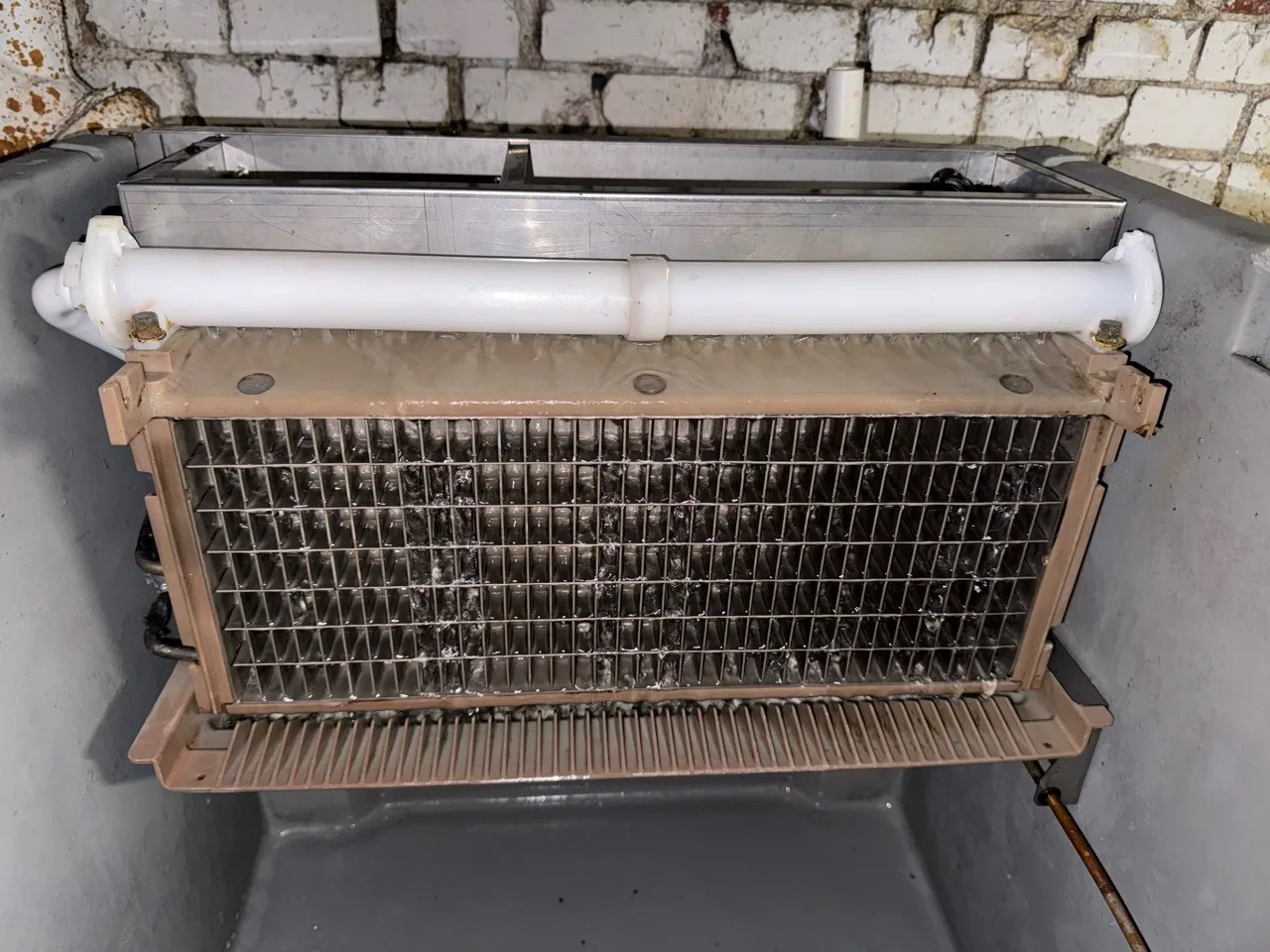
An ice machine can keep making ice while scale, restricted airflow, or a slow drain is already reducing its capacity. By the time production stops completely, the business may be facing both an equipment repair and an immediate supply problem.
A useful maintenance routine watches the whole system: water quality, cleanliness, airflow, drainage, refrigeration performance, and the pattern of each freeze and harvest cycle. The exact procedure and schedule should always follow the manufacturer’s instructions for the model installed.
A practical ice machine routine
- Observe daily production and note changes in cube size, clarity, harvest time, noise, or water flow.
- Keep the air intake and discharge clear. Do not stack supplies around an air-cooled condenser.
- Clean and sanitize food-zone components at the manufacturer’s interval and whenever visible soil or slime appears.
- Replace water filters according to water quality, usage, pressure drop, and the filter manufacturer’s guidance.
- Inspect the bin, drain, water line, and surrounding floor for leaks, slow drainage, or standing water.
- Record the model, serial number, cleaning date, filter change, and any performance concern for the next service visit.
When maintenance should become a service call
Call for diagnosis when the machine produces noticeably less ice, makes thin or incomplete cubes, freezes too long, fails to harvest, shows a repeated error, leaks, or becomes unusually loud. Cleaning can correct sanitation and airflow conditions, but it should not be used to hide an electrical, control, water, or refrigeration fault.
If ice quality may be unsafe, stop serving it and follow the manufacturer’s cleaning and sanitation procedure. For recurring scale or water-related problems, review filtration and local water conditions rather than repeatedly resetting the machine.