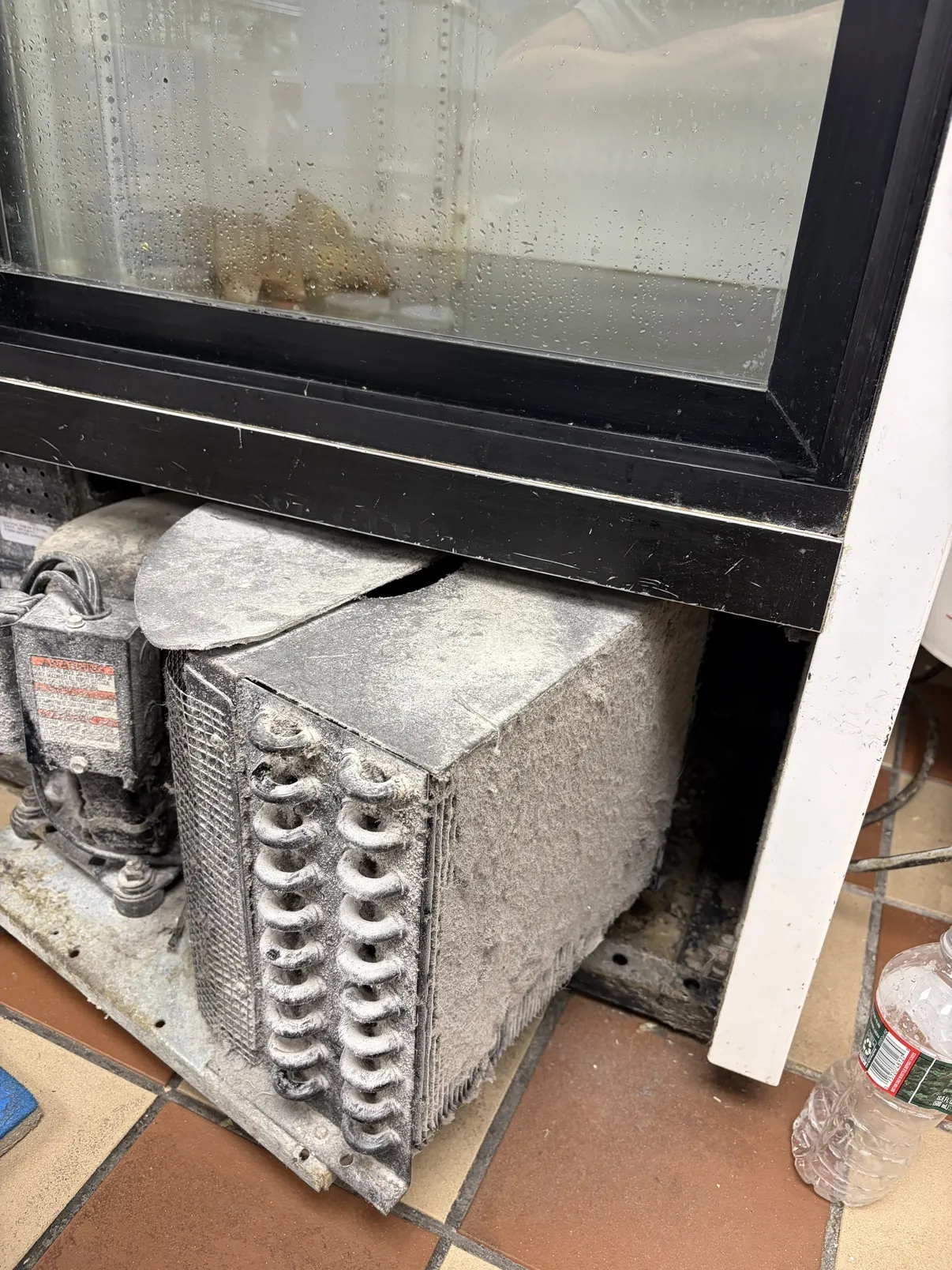
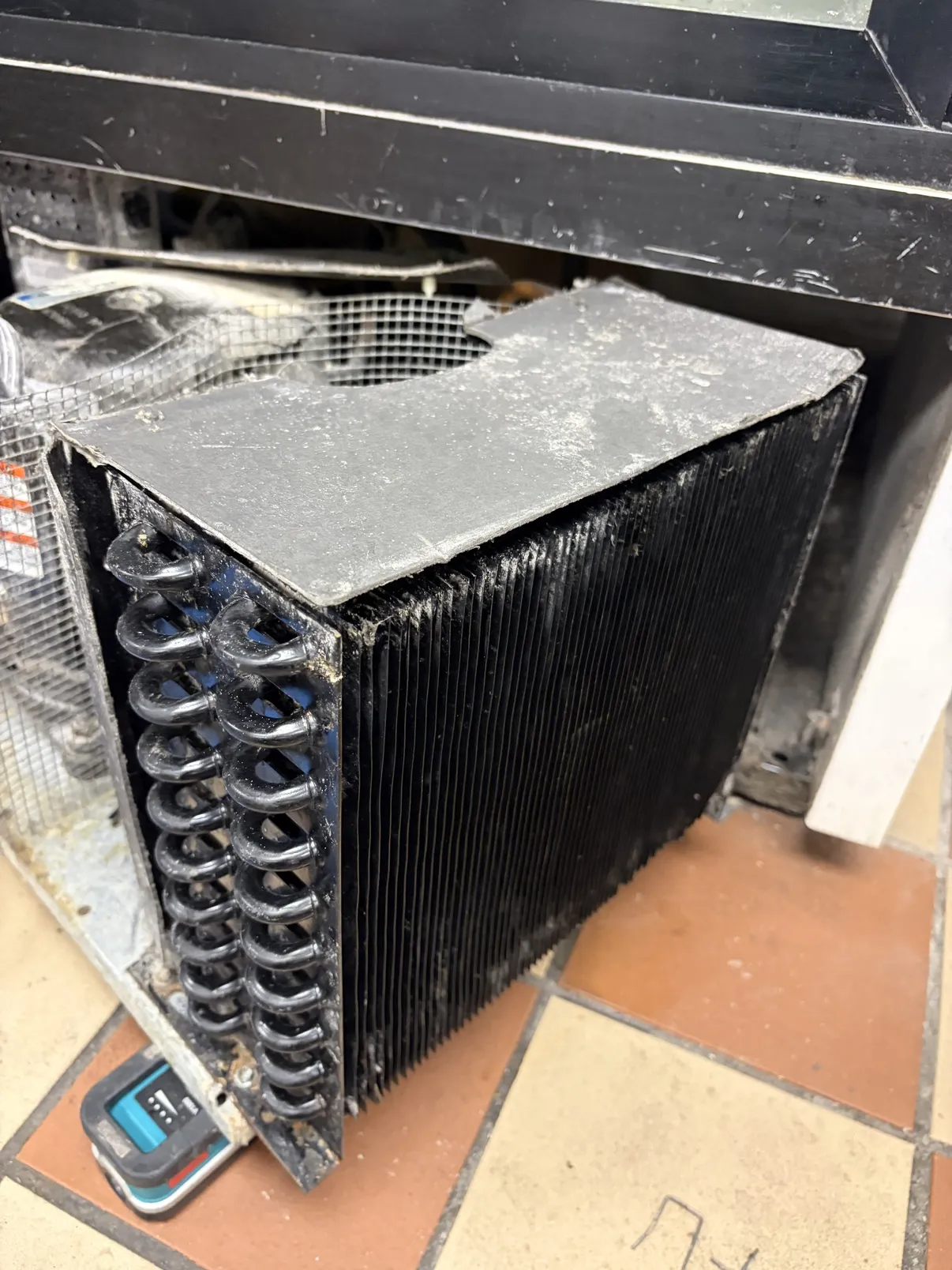
These photos are from a real maintenance visit — not a staged demo. A glass-door merchandiser, a condenser coil nobody had looked at in a long time, and a technician with a brush, a vacuum, and coil cleaner. This is what routine condenser coil maintenance actually looks like, and why it matters so much.
What a condenser coil does (in plain language)
Your refrigeration system moves heat out of the box and dumps it into the surrounding air through the condenser coil. For that to work, air has to flow freely across the coil's fins. In a commercial kitchen, those fins act like a filter — collecting dust, flour, and airborne grease every single day.
What happens when nobody cleans it
Look at the "before" photos above: the fins are packed solid. When air can't get through:
- Heat gets trapped in the system instead of escaping. The compressor has to work harder and run longer to achieve the same cooling.
- The compressor runs hotter than designed. Heat is the enemy of compressors — chronic overheating shortens their life and is one of the most common reasons they fail.
- Energy use climbs while cooling performance drops. You're paying more for less refrigeration.
- The breakdown rarely happens on a quiet Tuesday. It happens on the hottest, busiest day — when the system is under maximum load and has zero margin left.
None of this is dramatic or sudden. It's slow, silent, and completely preventable.
What the cleaning actually involves
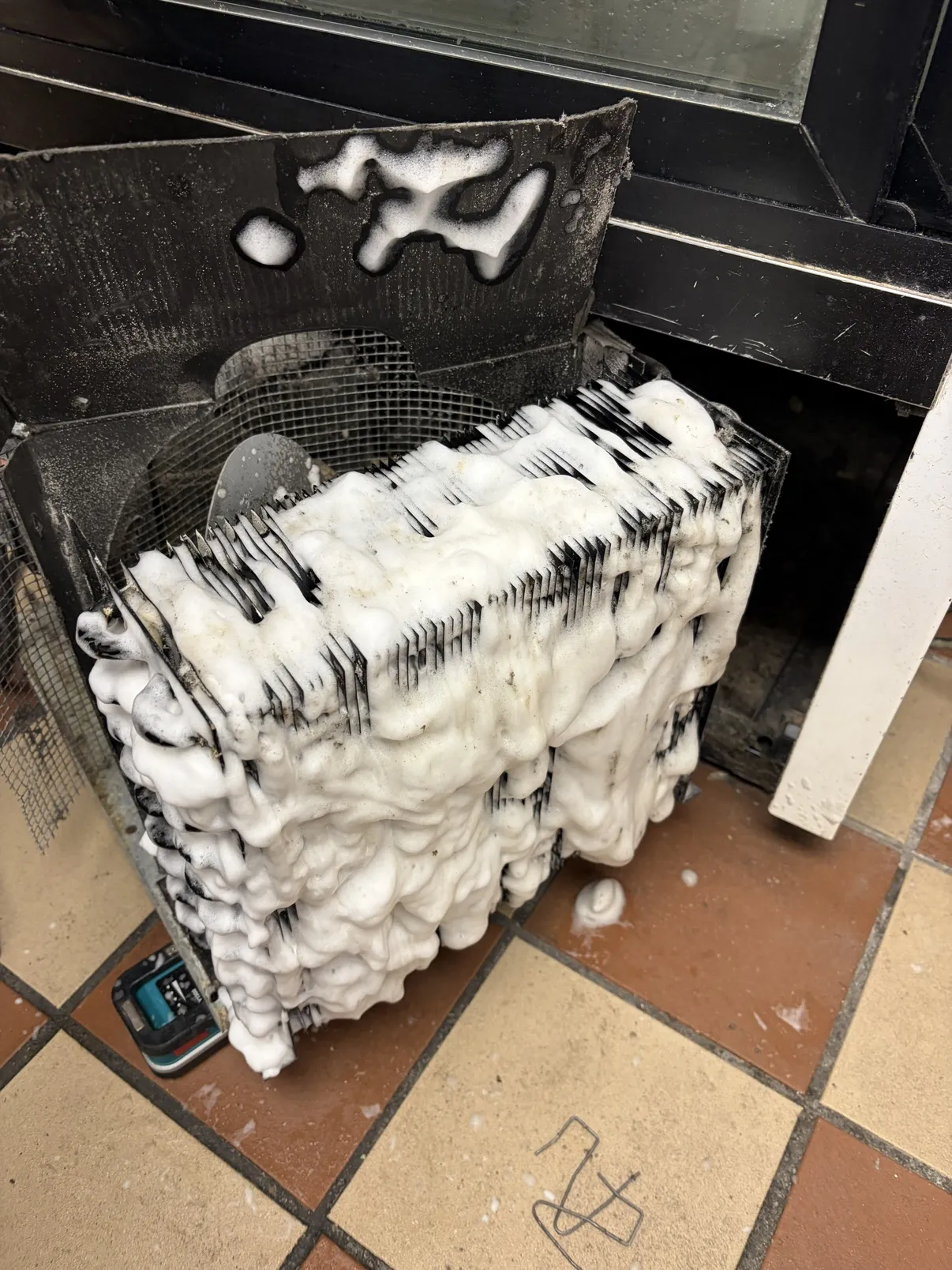
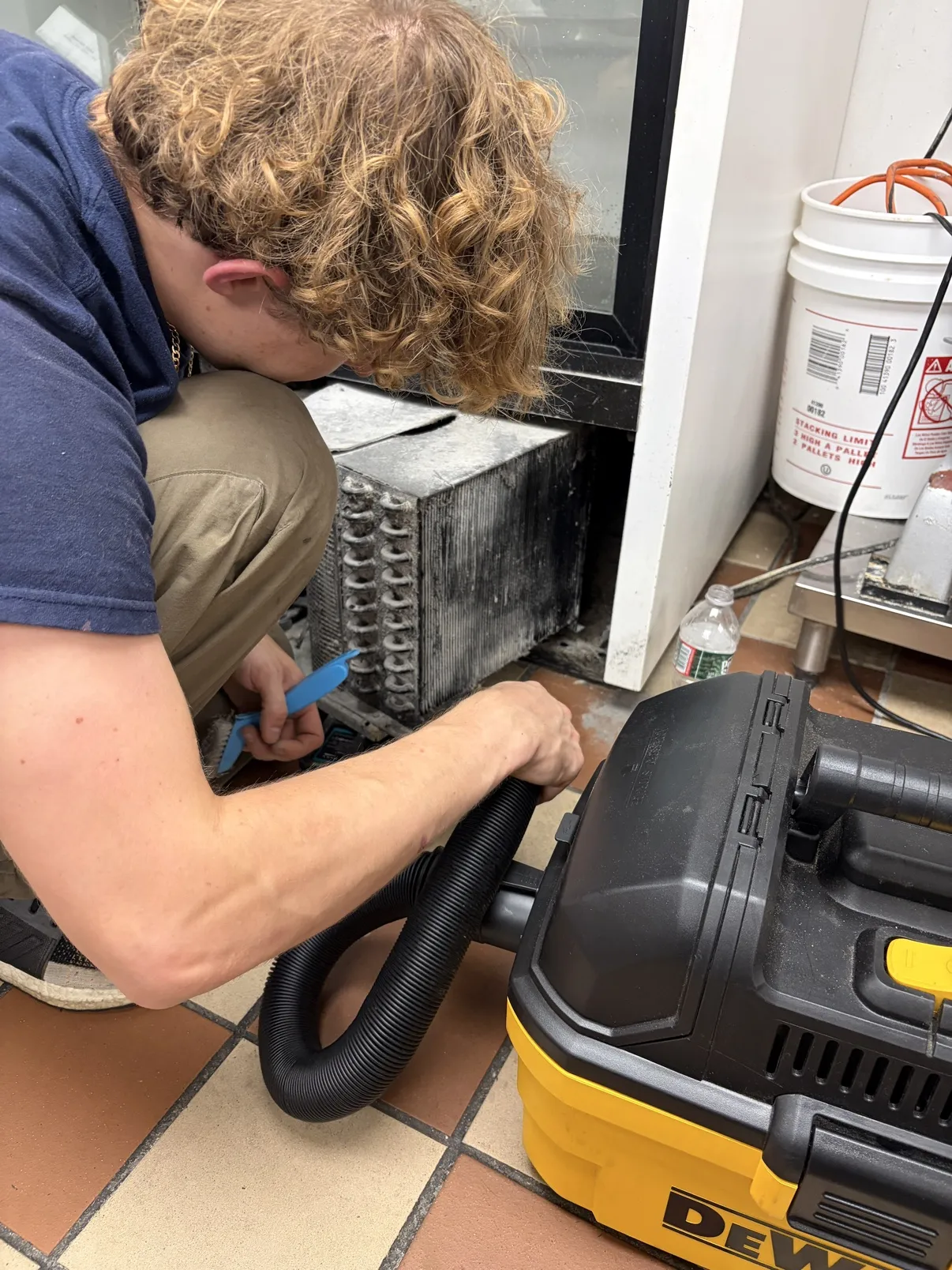
The "during" photos show the real process. First, the coil is pulled out so every side is accessible. Then a foaming coil cleaner is applied — the foam expands into the fins and loosens the grease and grime that dry brushing alone can't reach. Finally, the technician brushes and vacuums the coil fin by fin until air can move through it freely again. It's straightforward work. It just has to actually happen — on a schedule, not when something breaks.
Signs your coils are overdue
You don't need to pull the unit apart to suspect a problem:
- The unit runs long cycles or seems to never shut off
- The area around the equipment feels unusually warm
- Electric bills creeping up with no other explanation
- Visible dust buildup on or around the coil and fan area
If any of that sounds familiar, the coil probably looks like the "before" photos.
Put it on a schedule, not on a wish list
Condenser coil cleaning is one of the highest-value items in a preventive maintenance visit: low cost, short time on site, and it directly protects the most expensive component in the system — the compressor. In a busy kitchen environment, coils don't stay clean on their own. Regular maintenance keeps them that way.
Don't wait for the breakdown
If your equipment hasn't had its coils cleaned recently, now is the time. Call Frostline Commercial Refrigeration at (857) 666-8916 to schedule preventive maintenance — before a dusty coil becomes a dead compressor.