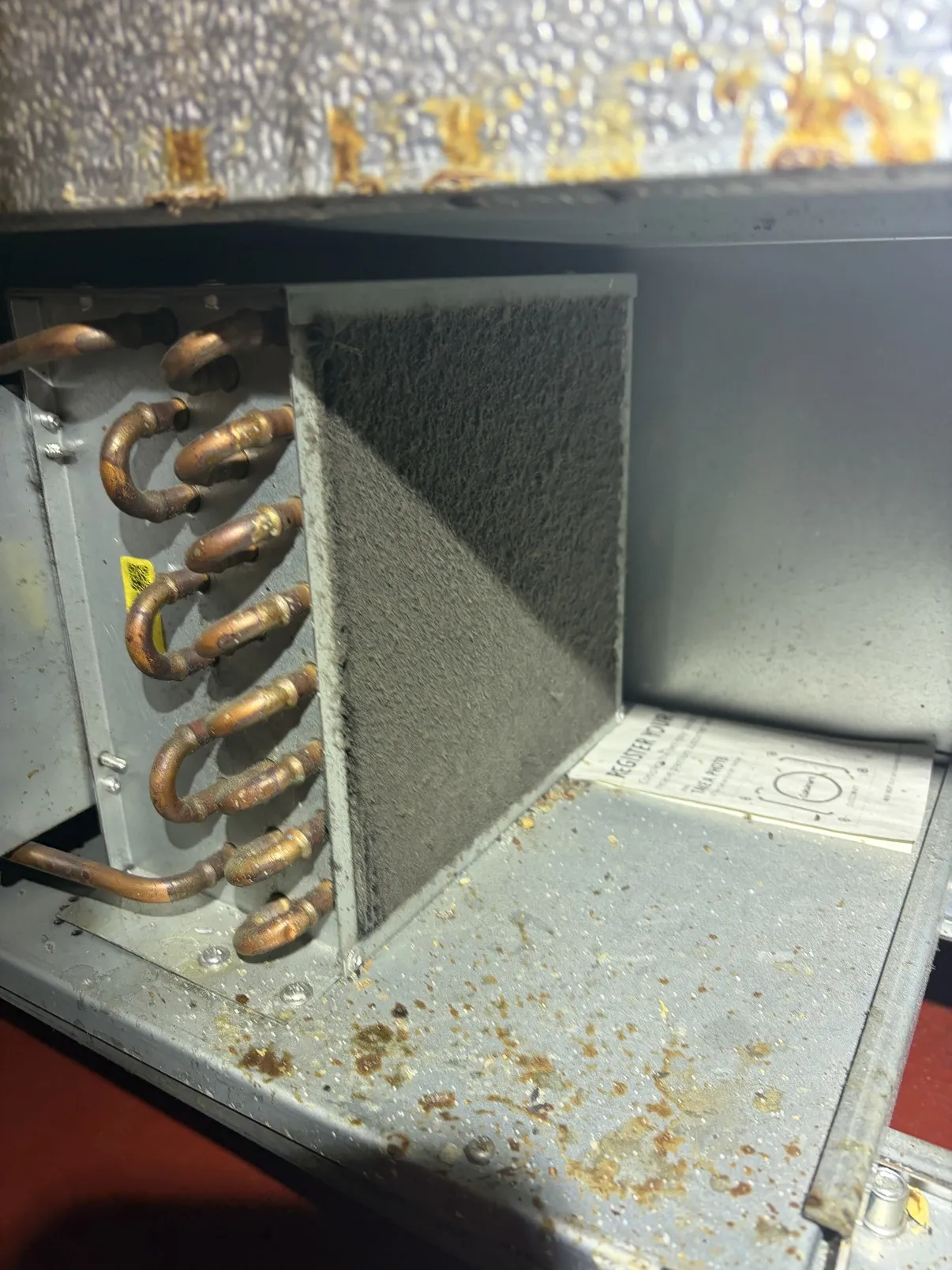
Look at the photo above. That gray blanket covering the coil isn't part of the equipment — it's dust, packed so thick the fins underneath have nearly disappeared. This is a condenser coil from a real commercial unit, and every day it looked like this, its owner was paying extra on the electric bill for no reason.
Where your electricity actually goes
A commercial refrigerator spends most of its energy running the compressor. The compressor's job is to pump heat out of the box and push it out through the condenser coil into the surrounding air. For that heat transfer to happen efficiently, air must flow freely across the coil's fins. Dust ruins that exchange in two ways: it physically blocks airflow between the fins, and it acts as insulation, trapping heat against the coil. The system still has to remove the same amount of heat from your product — it just can't do it as easily anymore.
Longer runtimes = higher bills
Here's the part that hits your wallet: when the coil can't shed heat efficiently, the compressor has to run longer to get the box down to temperature — and it cycles on again sooner after shutting off. Longer runtimes, more frequent cycles, month after month. This doesn't show up as one dramatic spike. It creeps. The bill climbs a little, then a little more, and because there's no single event to blame, most owners never connect it to the dusty coil behind the unit. Multiply that across every refrigerated unit in the building — walk-ins, reach-ins, merchandisers, ice machines — and the waste adds up.
The compressor pays too
There's a second cost beyond the electric bill. A compressor forced to run longer and hotter than designed wears out faster. Overheating is one of the most common reasons compressors fail, and a compressor replacement is one of the most expensive repairs in commercial refrigeration. The dust on the coil doesn't just raise your energy costs — it shortens the life of the most expensive component in the system.
What you can do about it
Take a look: if you can see the coil, check whether the fins are visible or buried under dust and grease. Keep the area around the equipment clear so air can circulate — don't box units in with storage. Make coil cleaning part of scheduled preventive maintenance, not something that happens "when we get around to it." In a kitchen environment, coils collect buildup constantly. A coil cleaning is a short, inexpensive service visit. The energy it saves starts paying back immediately — and it protects the compressor at the same time.
Stop paying for dust
If your electric bills have been creeping up and your coils haven't been cleaned recently, the two may be connected. Call Frostline Commercial Refrigeration at (857) 666-8916 to schedule preventive maintenance — and stop paying extra to run dirty equipment.